Making the Invisible Visible: How Neuropsychology Turns Cognitive Injury Into Evidence
The most common—and frustrating—obstacle in personal injury litigation is a familiar scenario: Your client, following a high-velocity collision, displays classic symptoms of a Traumatic Brain Injury (TBI)—they forget simple schedules, are unusually irritable with their spouse, and struggle to concentrate at work. Despite these clear behavioral changes, the defense will often challenge the claim by citing a "clear" CT scan from the Emergency Room and an "unremarkable" subsequent MRI.
Board-certified physicians
Objective, FDA-approved testing
Multidisciplinary concussion rehab
What attorneys can point to when symptoms are real—but imaging is normal.
It is the most common—and frustrating—hurdle in personal injury litigation. Your client was involved in a high-velocity collision. They exhibit the hallmark signs of a Traumatic Brain Injury (TBI): they can no longer remember simple schedules, they are uncharacteristically irritable with their spouse, and they struggle to maintain focus at work. Yet, the defense is pointing to a "clear" CT scan from the Emergency Room and a subsequent "unremarkable" MRI.
In the eyes of a jury or an insurance adjuster, if the "pictures" don't show a fracture or a bleed, the injury doesn't exist. This leaves you, the attorney, in a difficult position: how do you prove a life-altering injury when the traditional evidence is invisible?
The answer lies in shifting the focus from the brain's structure to its function. At All Things Neuro, we specialize in helping attorneys bridge this gap. Through comprehensive Neuropsychological Evaluations (NPE), we transition a client’s subjective complaints into objective, litigation-ready evidence. We don't just show what the brain looks like; we show how it is—or isn't—working.
The Science of Why “Clear” Imaging is Deceptive
To win a TBI case with negative imaging, you must first educate the adjusters (or the jury) on the difference between "hardware" and "software."
Hardware vs. Software
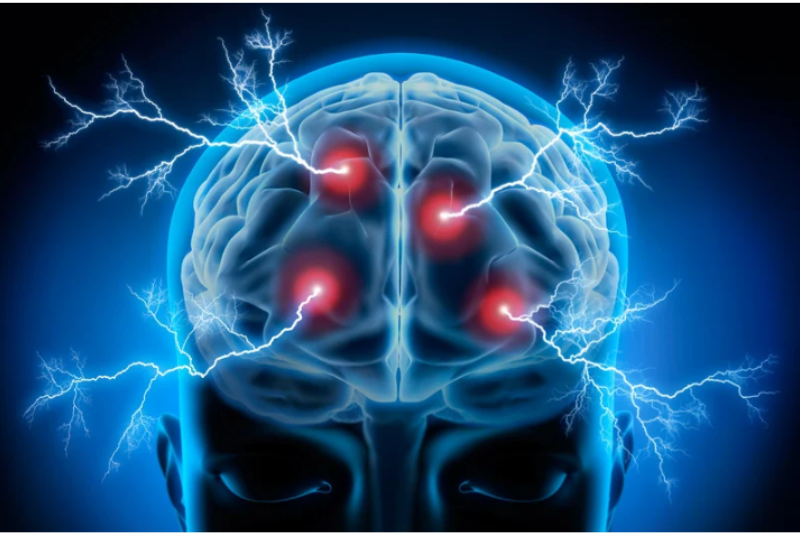
Standard CT scans and MRIs are designed to detect structural "hardware" damage—physical breaks, swelling, or hemorrhaging. However, a concussion or mild TBI (mTBI) is primarily a "software" malfunction. It is a functional disruption of the neural pathways and metabolic processes. You can have a perfectly intact "computer" (the brain structure) that is suffering from a massive "operating system" crash.
The Secondary Injury Cascade
As established in the AMA Guides to the Evaluation of Permanent Impairment, “TBI is not an event or a final outcome; it is the beginning of a chronic process.” The initial impact triggers a Secondary Injury Cascade—a wave of neuro-inflammation and metabolic crisis that often peaks days or weeks after the accident. Because imaging is typically done in the acute phase (the ER), it completely misses the evolving functional deficit that defines the client's long-term disability.
The Missing 56%
The reliance on structural imaging in emergency settings leads to a massive diagnostic gap. Data from an Emory University Study (published in the American Journal of Emergency Medicine) reveals a startling reality: 56% of mild TBI cases are missed in emergency departments. Furthermore, only about 35% of patients who actually have sufficient documentation for a TBI diagnosis are ever properly labeled with one.
Neuropsychological Evaluation (NPE): The “Polygraph” of Brain Function
For an attorney, the Neuropsychological Evaluation (NPE) is the bridge between a client’s lived experience and a jury’s need for objective proof. If a CT scan is a photograph of the brain's "anatomy," the NPE is a high-speed video of its "performance."
What NPE Measures
An NPE is an exhaustive battery of standardized tests that assess the brain’s ability to perform complex tasks. We don't just ask if someone is "forgetful"; we measure:
- Executive Function: The ability to plan, organize, and multi-task (often the first thing to fail after a TBI).
- Processing Speed: How quickly the brain can ingest and react to information.
- Memory Retention: The difference between short-term acquisition and long-term retrieval.
- Emotional Regulation: Quantifying changes in personality, irritability, and anxiety that are clinical—not just "stress."
The Defense-Killer: Validation Scales
One of the most powerful aspects of the NPE for litigation is the inclusion of Validity Testing. Defense experts often attempt to label TBI symptoms as "malingering" or "symptom magnification." Our board-certified psychologists use built-in, scientifically validated metrics to prove that the client is put forth a credible effort. When a report shows "Pass" on all validity scales, it effectively strips the defense of their most common argument.
Quantifying the Loss
An NPE converts vague descriptions into data. We turn "my client has trouble thinking" into "the client is performing in the 5th percentile for verbal memory compared to their pre-morbid baseline." This provides a concrete, numeric value to the client’s loss of function—something a jury can actually visualize and assign damages to.
All Things Neuro: The Strategic Advantage for Attorneys
At All Things Neuro and Neuro360, we understand that a medical report is a legal tool. We don't just provide a diagnosis; we provide a strategic framework for your case.
The "Link" Strategy: Connecting the Dots
Our mascot, Link, represents the "Link" between the invisible injury and the visible evidence. We take a multi-disciplinary approach that most single-provider clinics cannot match. We combine the Psychological Evaluation with FDA-approved objective testing (such as ocular-motor and oculo-vestibular analysis).
By layering these results, we create a "Fortress of Evidence." If the eye-tracking data shows a physical deficit and the NPE shows a corresponding cognitive delay, the correlation becomes undeniable. This multi-layered data makes it significantly harder for insurance carriers to offer "low-ball" settlements.
Board-Certified Authority
In a deposition, credentials matter. Our evaluations are overseen and performed by board-certified experts who are experienced in the litigation environment. We provide the "expert weight" necessary to withstand cross-examination and ensure your medical evidence remains admissible and persuasive.
We serve as your diagnostic strategy partner, ensuring that the documentation we provide uses the standardized language and impairment ratings required by the AMA Guides, making it as defensible as it is descriptive.
Building a Litigation-Ready Case File
In the legal arena, a case is only as strong as the documentation supporting it. Standard "chart notes" or brief summaries from a general practitioner are often insufficient to withstand the scrutiny of a deposition or a motion to exclude. To successfully argue for the value of a cognitive injury, you need a case file that is built for litigation from day one.
Defensible Documentation Over Descriptive Notes
At All Things Neuro and Neuro360, we don't just provide medical records; we provide forensic-level documentation. Our comprehensive PDF reports are structured to meet the needs of both the medical and legal communities. We utilize standardized clinical language that explicitly details the severity of the deficit, the validity of the results, and the functional impact on the client’s life. This level of detail makes our reports difficult to dismiss and provides a clear roadmap for your demand package.
AMA Impairment Ratings: The "Hook" for Damages
One of the most significant advantages of partnering with our centers is our proficiency in the AMA Guides to the Evaluation of Permanent Impairment. When a client has reached Maximum Medical Improvement (MMI) but continues to suffer from cognitive or emotional deficits, we can assign a formal Impairment Rating.
By converting a "software" malfunction into a numeric percentage of whole-person impairment, we give you a concrete, standardized value to point to during settlement negotiations or at trial. This "number" is often the missing piece of the puzzle that justifies a higher settlement tier in both Personal Injury and Workers' Compensation cases.
The Expert Witness Path: Establishing Causation
A diagnosis is only useful in court if it can be tied to the proximate cause. Our reports are designed to help establish Causation. By correlating the mechanism of the accident with the specific cognitive deficits found in the NPE and the objective ocular-motor data, we provide the medical nexus required to win.
Don’t Let an “Invisible” Injury Settle for Less
A "normal" MRI is not a clean bill of health; it is simply proof that the brain’s hardware hasn't fractured. It says nothing about the "software"—the memory, the processing speed, and the personality—that makes your client who they are.
As an attorney, you owe it to your clients to make their invisible injuries visible. By partnering with All Things Neuro and Neuro360, you ensure that your cases are backed by board-certified expertise and objective, data-driven evidence.
Don’t let the defense dictate the narrative based on an incomplete picture. Let our mascot, Link, help you provide the missing "link" between the trauma of the accident and the reality of your client’s cognitive loss.
Partner with the Leaders in Neuro-Diagnostics
Ready to turn your client's "invisible" symptoms into a "visible" victory? Let us provide the objective evidence you need for your most complex TBI cases.
- Refer a Client Today: * Call Us: 888-7-CONCUSSION
- Visit Us: AllThingsNeuro.com | Neuro360Care.com
- Corporate Office: 3535 Peachtree Road NE, #320, Atlanta, GA 30326
Wellness Disclaimer
This content is intended to support education and awareness around health and wellness topics and does not replace personalized medical care. Individual needs vary, and readers are encouraged to consult with their healthcare provider to determine what is appropriate for their unique health situation.